A women-led, biodegradable tableware brand had a genuinely good product and a clear mission — but no way for the world to find it. Here's how a dedicated delivery pod took it from a blank slate to a real revenue engine in five months.
Executive Snapshot
Client: Aaroyaa — eco-friendly, biodegradable tableware, made in Bhopal, India. Engagement: End-to-end brand and digital growth partnership. Timeline: 5 months, from a from-scratch start. Headline result: ₹50 lakh in turnover and 30,000+ products sold online
When Chartered Accountant Megha Agrawal came to Newrise Technosys, Aaroyaa existed mostly as conviction: sustainable tableware, a manufacturing base, and a team of women artisans. There was no logo, no website, no social presence, and no way to place an order. Five months later, Aaroyaa was selling across its own store and India's biggest marketplaces — and had crossed ₹50 lakh in turnover on 30,000+ units sold.
This is the story of how that happened, and what it says about building product brands the right way.
The Spark: How Aaroyaa Began
Every good brand starts with someone who can't unsee a problem.
For Megha Agrawal, the problem was plastic. A Chartered Accountant by training, she'd spent years close to business — first helping her own family's enterprise grow, later travelling and getting a firsthand look at sustainable industries. Somewhere in that journey, a pattern kept surfacing: single-use plastic was everywhere. At celebrations. At takeaways. On tables that would be cleared and forgotten in an hour, leaving behind waste that would outlast everyone in the room.
But Megha saw a second thing at the same time — an opportunity that most people miss. What if the answer to a plastic problem could also be an answer to something else she cared about deeply: creating dignified, sustainable livelihoods for women?
That double insight became Aaroyaa. Products made from nature's own materials — sugarcane bagasse and areca palm leaf — that are food-safe, sturdy, and 100% biodegradable. And behind them, a workshop of 50+ women artisans turning a mission into a living. As one of the brand's own taglines puts it: "A Product by a Woman, for Every Woman."
It was a beautiful idea. It just didn't exist anywhere a customer could find it.
The Challenge: A Powerful Vision Without a Digital Presence
It's worth being precise about what Aaroyaa did and didn't have when this began, because the gap is the whole story.
What Aaroyaa had going for it:
● A genuinely good product — food-grade, leak-resistant, compostable within 60–90 days
● A manufacturing base and real production capability
● A team of skilled women artisans
● A clear, emotionally resonant mission that customers increasingly care about
What Aaroyaa did not have:
● Any brand identity — no logo, no colours, no visual language
● No website and no way to take an order online
● No presence on Instagram, Facebook, LinkedIn, or anywhere else
● No listings on Amazon, Flipkart, or quick-commerce apps
● No business infrastructure — no Google Merchant setup, no verified listing
This is a specific and often underestimated kind of challenge. Aaroyaa didn't have a broken funnel that needed fixing. It had no funnel at all. A strong product sitting in a warehouse, invisible to the exact people who were actively searching for a plastic-free alternative.
Building a brand from zero is harder than optimising an existing one, because there's no traffic to learn from, no baseline to beat, and no shortcut — every single layer has to be created before the first rupee can move.
Why Aaroyaa Partnered With Newrise Technosys
Megha had a choice most founders face at this stage, and it's a genuinely consequential one.
She could assemble the brand piece by piece — a freelance designer for the logo, a web developer for the site, a separate person for social media, an ads specialist for campaigns, and yet another consultant to handle marketplaces. On paper, that looks flexible and even cost-efficient.
In practice, it's where a lot of promising early-stage brands stall. The designer doesn't talk to the developer. The ads person doesn't know what the marketplace strategy is. The founder becomes an unpaid project manager, stitching five vendors together and absorbing every gap between them. Momentum dies in the handoffs.
Megha chose the opposite path: a single, accountable partner to own the whole journey from brand to revenue. That's why she brought in Newrise Technosys — not just as a development shop, but as a delivery partner whose model is built precisely for this: one coordinated team, one shared understanding of the goal, one point of accountability.
Inside the Approach: The NRT POD Model in Action
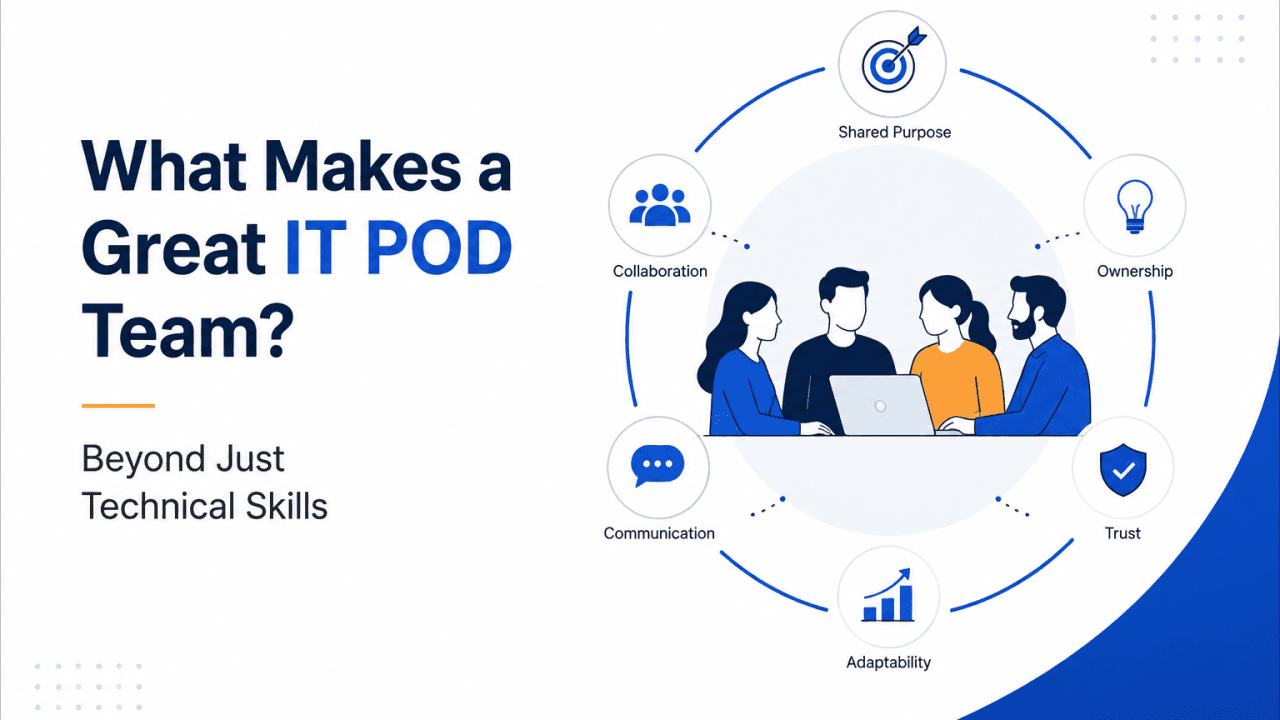
Newrise Technosys runs on an IT POD model — dedicated, cross-functional pods assembled around a client's actual objective rather than a single skill sold in isolation.
For Aaroyaa, that meant standing up a pod with everything the brand needed under one roof and one plan:
● Brand and design — to create the identity and the visual world
● Web and e-commerce development — to build the storefront and the buying experience
● Digital marketing and performance — to generate demand and turn it into orders
● E-commerce operations — to handle marketplace onboarding and business infrastructure
The advantage of a pod isn't just convenience. It's coherence. Because the same team owned the logo, the website, the ad campaigns, and the marketplace listings, every layer reinforced the others. The brand voice on Instagram matched the storefront, which matched the packaging language, which matched the product pages on Amazon. Nothing had to be re-explained across a vendor boundary, because there were no vendor boundaries. That coherence is what let a five-month sprint actually feel like a sprint.
Building Aaroyaa From the Ground Up
Here's what the pod actually built — and, more usefully, the thinking behind each piece.
Brand Identity & Visual Language
Everything started with identity, because you can't sell what you can't recognise. The pod built Aaroyaa's complete brand system: the logo, a nature-forward palette, and a visual and verbal language rooted in the two ideas at the brand's core — women-led and nature-first. This wasn't decoration. It became the connective tissue that made the website, the packaging, the social feed, and the ads all feel like one brand rather than five disconnected assets.
Website Design & E-Commerce Build
Next came aaroyaa.com — not a brochure site, but a working storefront designed to convert. The pod built out the full product catalogue organised into clean, browsable collections (Tableware, Drinkware, Kitchenware), a checkout flow, and trust signals positioned exactly where hesitation happens: free shipping over ₹1,499, secure payments, and a 7-day no-questions return policy. Crucially, it also built dedicated bulk-order journeys — because cafés, event organisers, and hotels buy very differently from a household, and a good store should serve both without friction.
Business & Marketplace Infrastructure
Before a single ad could run or a single marketplace could go live, the unglamorous groundwork had to exist. The pod set up Aaroyaa's Google Merchant Centre and its Google Business listing — the operational plumbing that makes a brand discoverable, shoppable, and legitimate in Google's eyes. It's the least visible work in this entire story and one of the most important, because everything downstream depends on it.
Social Media Presence, Built From Zero
The pod launched and shaped Aaroyaa across Instagram, Facebook, LinkedIn, and X. The strategy leaned into the one thing a generic tableware seller can never copy: the story. Women artisans at work. The materials behind the product. The quiet satisfaction of a guilt-free family Sunday. Instead of shouting "buy our plates," the feed invited people into a movement — which is a far more durable reason to follow, and eventually to purchase.
Performance Marketing That Drove Real Traction
A beautiful brand with no traffic is still invisible, so the pod ran performance marketing across paid social to convert awareness into actual orders. The emphasis here matters: the goal was never vanity metrics. Impressions and likes don't pay salaries. The campaigns were built and iterated around real outcomes — clicks that became carts, and carts that became repeat customers — with early data steering spend toward what was genuinely working.
Expanding Beyond the Website: Marketplace Reach
Finally, the pod met customers where they already shop. Aaroyaa was listed and made discoverable across Amazon, Flipkart, Meesho, and quick-commerce via Swiggy Instamart. An owned store gives you margin and brand control; marketplaces give you reach and buyer trust. Running both in parallel meant Aaroyaa could compound demand from multiple directions at once instead of betting everything on a single channel.
Five Months, Mapped: The Build Timeline
The work moved in deliberate phases — foundation first, then infrastructure, then the demand engine, then scale. Sequence matters: you can't run ads to a store that doesn't exist, and you can't list on marketplaces before the brand is real.
Phase | Focus |
Month 1 — Foundation | Brand identity, logo, visual language, positioning |
Month 2 — Infrastructure | Website and e-commerce build, Google Merchant & Business setup |
Month 3 — Launch | Store goes live, social channels activated, first campaigns |
Month 4 — Traction | Performance marketing scaled and optimised on real data |
Month 5 — Expansion | Marketplace onboarding compounds demand across channels |
Each phase set up the next. By the time paid campaigns were spending seriously, there was a store worth sending traffic to. By the time marketplaces switched on, there was a brand worth recognising.
The Results
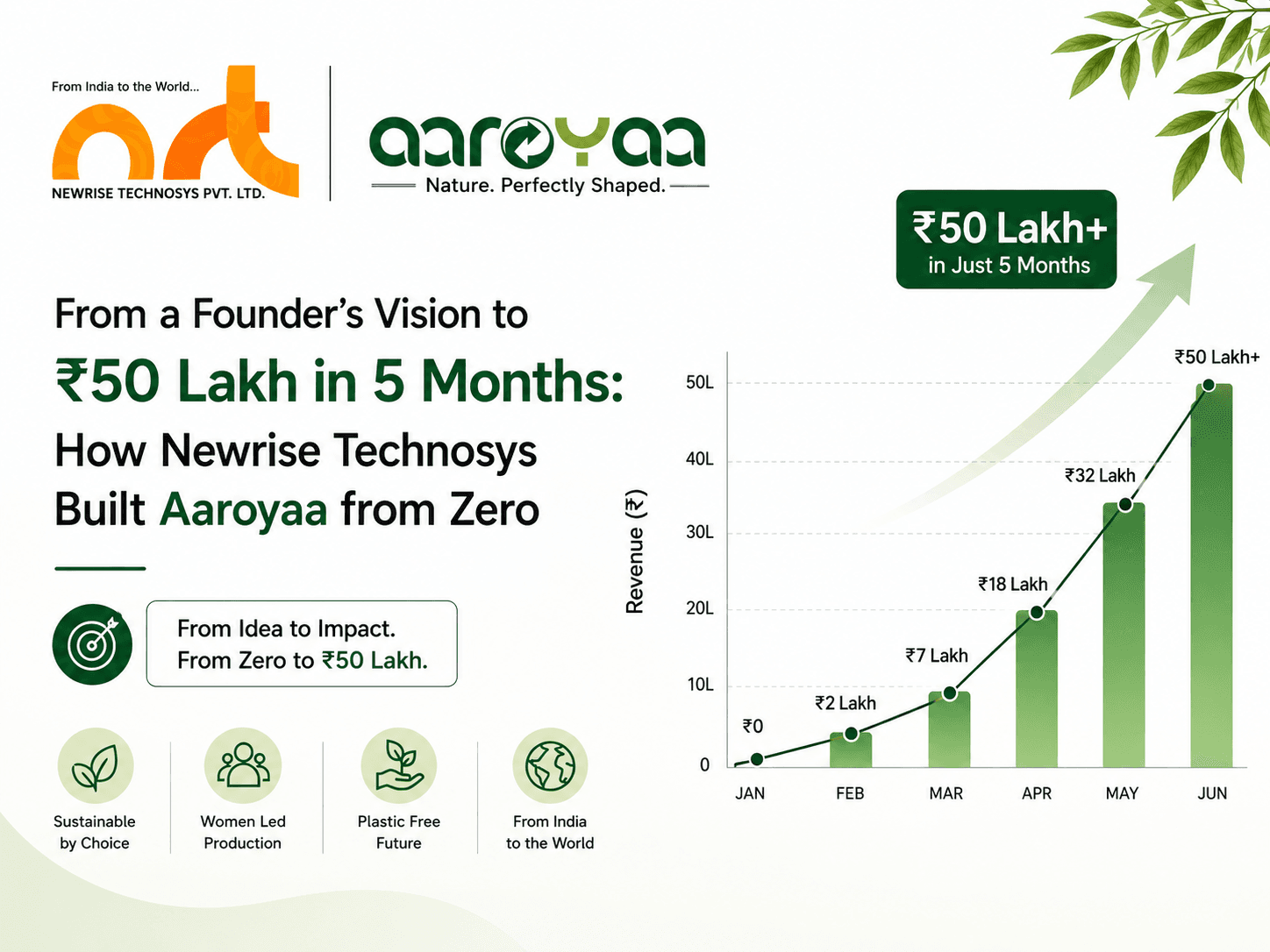
Five months after starting from nothing, the numbers told a clear story.
By the Numbers
₹50 lakh — turnover generated 30,000+ — products sold online 5 months — from a from-scratch build 4+ — marketplaces live, alongside the owned store
Here's why those figures matter more than they might first appear.
The context: this wasn't growth on top of an existing base. There was no prior revenue, no legacy traffic, no established audience to reactivate. The starting line was zero.
The achievement: ₹50 lakh in turnover on 30,000+ units, built entirely inside a five-month window, across a store and multiple marketplaces that all had to be created first.
The relevance: for a young, direct-to-consumer product brand, this is the difference between "a nice idea we're still figuring out how to sell" and "a functioning business with real momentum." It's proof that a good product plus the right build can find its market fast — when the build is coherent, and the execution is focused.
Beyond Revenue: The Human and Environmental Impact
It would be a mistake to reduce this to a revenue chart, because Aaroyaa was never only a store — and the pod understood that from day one.
Behind those 30,000+ products sold is a workshop of 50+ women artisans whose work now reaches customers across the country. Behind every order is a piece of single-use plastic that didn't get made, didn't get used for twenty minutes, and didn't spend the next several centuries in a landfill. Each biodegradable plate, bowl, and cup delivered is a small, tangible swap in the right direction — multiplied thirty thousand times over.
That's the part that kept the whole engagement honest. Newrise Technosys wasn't just building a way to sell plates. It was building the infrastructure for a movement to reach the people who'd been waiting for it.
Honest Caveats: What a Result Like This Actually Requires
It would be easy to end on the numbers and imply this outcome is repeatable on demand. It isn't automatic, and pretending otherwise would do a disservice to any founder reading this.
A result like Aaroyaa's rests on a few things being true at once:
● The product has to be genuinely good. No amount of branding rescues a weak product. Aaroyaa's tableware is food-safe, sturdy, and delivers on its promise — marketing simply removed the barrier between it and its customers.
● The founder has to be decisive. Megha made fast, clear calls and trusted a single accountable partner instead of hedging across five. That decisiveness is a real input, not a given.
● The category has to have demand. Aaroyaa entered a market where customers were already seeking plastic-free options. Creating demand from nothing is a different, harder game.
● Five months is a sprint, not a finish line. These results reflect an intense, focused build. Sustaining and scaling them takes continued investment, iteration, and care.
We share this not to hedge, but because the honest version is the useful one — and because the same discipline that produced these results is what makes them worth trusting.
What This Case Reflects About the POD Delivery Model
Step back from Aaroyaa specifically, and there's a generalisable lesson here for any founder building a physical-product or mission-driven brand.
The instinct to hire specialists piecemeal is understandable, but it quietly loads all the integration risk onto the person least equipped to carry it: the founder. Every handoff between a designer, a developer, an ads freelancer, and a marketplace consultant is a place where the vision can blur, timelines can slip, and accountability can evaporate. When something goes wrong, everyone points at the previous link in the chain.
A dedicated pod inverts that—one cross-functional team, aligned on one goal, owning the outcome end to end. The founder gets to be a founder again — focused on product, people, and vision — instead of a full-time coordinator of vendors who've never met.
Aaroyaa is a clean illustration of why that structure works. The reason the brand, the store, the campaigns, and the marketplace listings all pulled in the same direction is simple: they were built by the same team, with the same understanding, at the same time.
In the Founder's Words
"Placeholder — to be replaced with Megha Agrawal's approved quote."
"When I started Aaroyaa, I had a product I believed in and a mission I cared about — but I had no idea how to get it in front of people. What I needed wasn't five different vendors; it was one team that understood the whole picture. Newrise Technosys became that team. They didn't just build me a website — they built the entire path from my workshop to my customers." — Megha Agrawal, Founder, Aaroyaa.
What's Next for Aaroyaa
The five-month story is really just the opening chapter.
With a working brand, a converting store, and a growing marketplace footprint in place, the runway ahead is wide: deeper marketplace presence, international shipping to take "biodegradable elegance from India to the world," a growing bulk and B2B business serving cafés, hotels, and event organisers, and custom-branded packaging for partners who want to make sustainability part of their own story.
The foundation is built. Now it compounds.
Building Something Meaningful? Let's Talk.
Aaroyaa's story isn't about a website or an ad campaign. It's about what becomes possible when a founder with a real product and a real mission partners with a team that can build the whole path from idea to revenue — coherently, accountably, and fast.
If you're building a product-based, mission-driven brand and you're tired of juggling vendors who don't talk to each other, that's exactly the kind of work Newrise Technosys is built for.
Start a conversation with Newrise Technosys →
Explore Related NRT Services
Continue from this insight into NRT Group delivery areas that support enterprise technology teams.
Ashok Sahu
CTO